
.png)
Expert Tips for Storing Firewood in Santa Barbara County
- Santa Barbara Firewood

- 20 hours ago
- 11 min read
Is your wood pile a reliable fuel source or a breeding ground for local termites? In Santa Barbara County, the coastal moisture is relentless. It rots premium oak. It invites pests into your home. You invested in quality fuel. Watching it crumble under the marine layer is a waste of resources. Proper storage of firewood is the only way to protect your investment and your property.
We know the frustration of a collapsing, damp mess. You want a clean, organized stack that burns hot when the Central Coast winter hits. This guide delivers the professional standards required to keep your seasoned oak dry and accessible. We will cover elevation techniques, airflow requirements, and strategic placement to ensure your wood stays prime for the season. Learn how to transform a messy heap into an efficient, long-lasting fuel reserve. Master these storage essentials to ensure your home stays warm and your wood remains pest-free.
Table of Contents
The Science of Firewood Storage: Why Seasoned Oak Needs Care
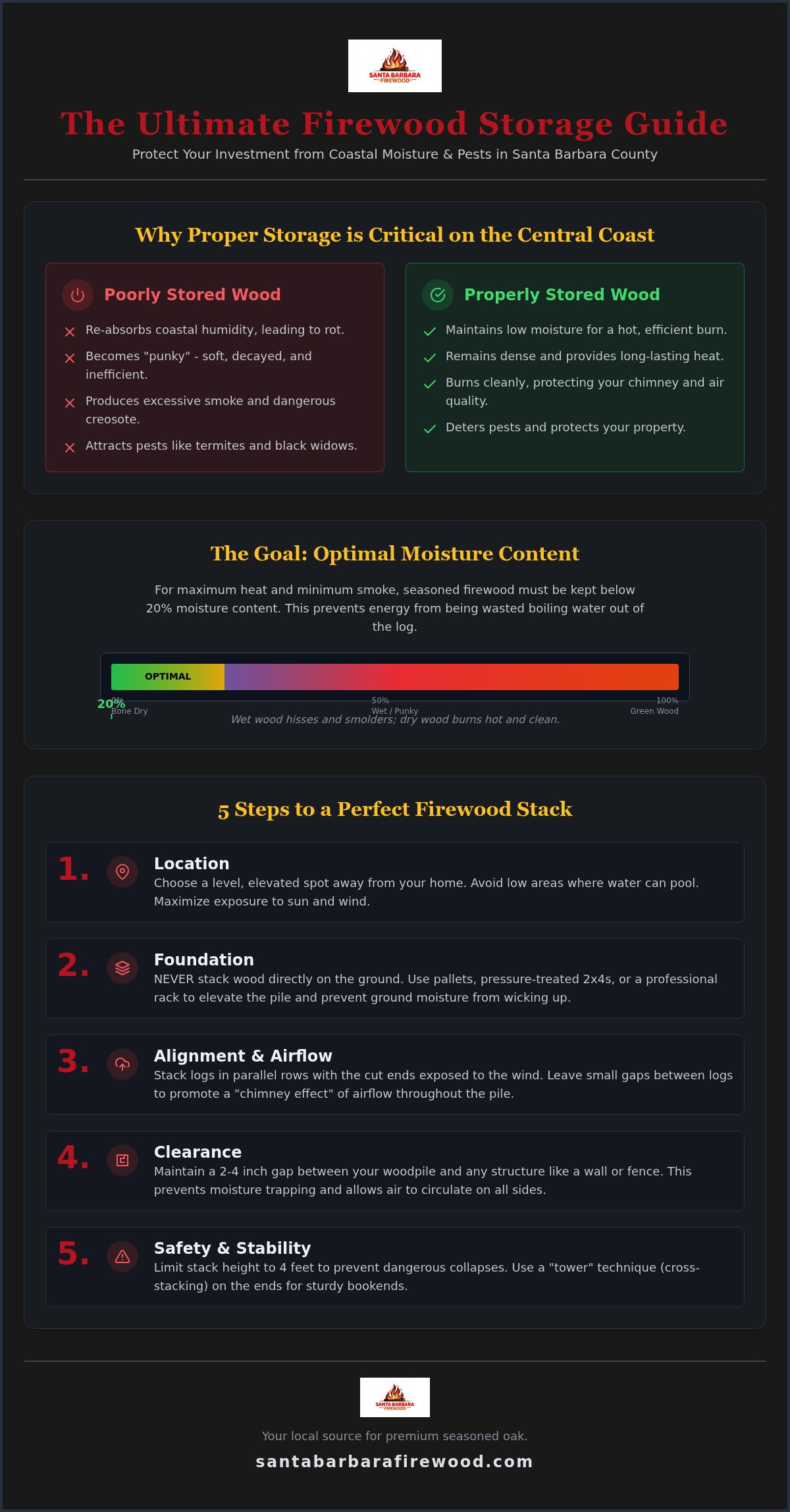
Firewood storage is a technical process. It isn't just about making a pile in the backyard. Effective storage of firewood is a strategic method for maintaining low moisture levels. In Santa Barbara County, the marine layer is a constant factor. Seasoned oak is a high-density fuel and a premium investment. If stored poorly, it will re-absorb ambient humidity. This leads to punky wood. Punky wood is soft, decayed, and structurally compromised. It burns inefficiently. It produces excess smoke. Your goal is simple. Keep the moisture content below 20% for maximum heat output.
When you purchase a full cord, which is the standard unit of measure for firewood, you are managing a massive amount of potential energy. Proper storage of firewood ensures that energy is preserved. A well-placed stack protects your oak from the elements while allowing the wood to breathe. Without this balance, even the best seasoned wood will degrade within a single coastal season. You must prioritize airflow and elevation to maintain the wood's integrity.
Moisture Content and Burn Efficiency
Wet wood is a liability. It doesn't produce heat immediately. Instead, the fire must boil away the internal water before the wood can actually burn. This process wastes energy. It lowers the temperature of your hearth. You can hear this failure. It's the distinct hissing sound of steam escaping the grain. Poorly stored wood creates thick, acrid smoke that clogs your chimney. Seasoned wood is ready for immediate use. Green wood requires a year of drying. Don't mix the two. Keep your seasoned supply isolated to ensure a consistent, hot flame.
Why Oak Requires Superior Airflow
Live Oak and Red Oak are heavy. They are incredibly dense. This density provides the long burn times Santa Barbara residents value. However, it also means these woods are prone to internal rot if air becomes stagnant. Dense hardwoods trap moisture deep in the fibers. Without constant airflow, mold and fungus take hold. Seasoned firewood is wood with less than 20% moisture. Achieving and maintaining this level requires a stack that acts like a lung. Air must move through the pile to carry away moisture. If the air stays still, the wood stays wet. It's that simple.
Essential Stacking Techniques for Maximum Airflow
Stacking is an engineering task. It is not merely an organizational chore. When done correctly, a wood pile creates a chimney effect. This natural process pulls air through the logs. It evaporates moisture. It keeps your seasoned oak ready for the hearth. Poor stacking leads to stagnation. Stagnation leads to rot. In the storage of firewood, airflow is your most valuable asset. You must prioritize it above convenience.
Elevation is your primary defense against the ground. Dirt and grass hold moisture. If your wood touches the soil, it will wick up water. This invites fungus. It invites termites. Always use a raised base. Pallets, pressure-treated 2x4s, or professional metal racks are essential. If you are handy, you can build a woodshed to provide a permanent, elevated home for your fuel. This structure ensures that even during heavy rain, your wood remains off the damp earth.
Five Steps to a Perfect Firewood Stack
Location: Choose level, high ground. Avoid low spots where water pools after a storm.
Foundation: Set your pallets or racks first. Ensure they are stable and won't sink into soft soil.
Alignment: Place logs in parallel rows. Keep the stack tight enough for stability but loose enough for a breeze.
Clearance: Maintain a 2-4 inch gap between the stack and any structure. Walls and fences block air.
Safety: Limit the height to four feet. Taller stacks are prone to collapsing and are difficult to manage.
The "Ends Out" Rule
Moisture escapes wood through the cut ends of the grain. It travels along the fibers like a straw. If you hide these ends, the wood stays wet. Always stack with the ends exposed to the wind. Never throw wood into a random heap. Heaps trap moisture in the center. They create a perfect environment for pests. For the ends of your rows, use a "tower" technique. Cross-stack the logs in alternating directions. This creates a sturdy pillar that prevents the rest of the row from sprawling. Professional stacking ensures your storage of firewood is both safe and effective.
Managing Coastal Moisture and Pests on the Central Coast
The Central Coast presents unique environmental challenges for fuel preservation. Santa Barbara and Ventura counties face a persistent marine layer. This humidity is a constant threat to seasoned oak. Effective storage of firewood requires understanding these local microclimates. Inland areas like Santa Ynez might experience intense heat, but coastal zones like Goleta deal with high ambient moisture. Sunlight is your best natural defense. It kills mold spores. It keeps the surface of the logs dry. Position your stack where it receives maximum solar exposure during the afternoon. This makes the wood less hospitable to invasive insects.
Proper storage of firewood in coastal zones requires a balance between protection and ventilation. You aren't just fighting rain. You're fighting salt air and morning mist. If you leave your wood exposed, it will act like a sponge. If you seal it too tightly, it will rot from the inside out. Strategic placement and the right materials will save your investment from the elements.
Dealing with the Marine Layer
In Carpinteria and Goleta, morning fog is a daily reality. This moisture settles on your wood and stalls the burning process. You must use a top-only cover. A simple heavy-duty tarp or a permanent slanted roof works best. Never wrap the entire stack in plastic or tarps. This traps moisture against the wood. It creates a greenhouse effect that accelerates decay. Follow the EPA firewood storage guidelines to ensure your structure allows for side-ventilation. When the dry Santa Ana winds blow, uncover the wood. These hot, inland winds provide a powerful seasoning boost. They pull residual moisture from the grain in a matter of hours.
Pest Prevention and Home Safety
Local pests are more than a nuisance. They are a direct threat to your property. Termites, carpenter ants, and black widows thrive in damp, undisturbed wood. The "5-foot rule" is non-negotiable for Santa Barbara residents. Keep your stack at least five feet away from your home's foundation. This prevents a direct bridge for subterranean termites and wood-boring beetles. Use elevation to break the connection to the soil. As established in previous sections, pallets or racks are essential. They stop pests from moving directly from the earth into your fuel. Always inspect individual logs before bringing them inside. Look for mud tubes, exit holes, or thick webbing. A ten-second check prevents an expensive pest infestation in your living room.
Fire Safety and Chimney Health: The Storage Connection
Fire safety starts at the wood pile. Neglecting the proper storage of firewood creates a dangerous chain reaction in your home. Incomplete combustion is the direct result of burning wood that has absorbed coastal moisture or was never properly seasoned. This inefficiency does more than waste fuel. It leads to rapid creosote accumulation. Creosote is the leading cause of chimney fires in California homes. You must ensure your fuel is dry to protect your property and your family.
A well-maintained stack ensures that your oak performs as intended. When wood is stored correctly, it reaches the high temperatures necessary for a clean burn. This reduces the volume of smoke and particulate matter entering your flue. Proactive storage of firewood is your first line of defense against structural fire risks. It's a practical necessity for every homeowner on the Central Coast.
Understanding Creosote Accumulation
Damp wood is a fire hazard. It burns at a lower temperature because energy is diverted to evaporate trapped water. This produces "cool" smoke. As this smoke rises through your chimney, it loses heat. It condenses on the flue walls. This condensation turns into a thick, flammable tar. Creosote is a highly flammable byproduct of wood smoke. It hardens into a glaze that's difficult to remove and easy to ignite. Seasoned oak burns hot and fast. It minimizes these deposits. It keeps your flue clear and your home safe.
Indoor Storage Best Practices
Bringing wood inside requires discipline. Limit your indoor supply to what you'll burn within 24 hours. This prevents wood-boring pests from establishing a foothold in your living room. Keep all logs a safe distance from the hearth. Radiant heat is powerful. It can lead to accidental ignition if wood is stored too close to the firebox. Use a dedicated indoor rack with a bottom tray. This catches bark, debris, and any stray insects that may have hitched a ride. For total peace of mind, utilize Santa Barbara Firewood's Chimney Maintenance Services to ensure your system is clear of obstructions.
Safety requires more than just dry wood. Even with the best storage habits, annual maintenance is mandatory. Schedule a professional inspection to verify your chimney's integrity before the first cold snap. Proactive care is the only standard for a safe Central Coast winter. Don't wait for a blockage to occur. Contact the experts for a thorough Chimney Cleaning to protect your home this season.
Professional Stacking: How Santa Barbara Firewood Simplifies Your Winter
Mastering the storage of firewood requires time and physical effort. Most homeowners lack the equipment or the inclination to move a full cord of heavy oak. We solve this problem. Santa Barbara Firewood provides a premium, white-glove delivery experience. We don't simply dump logs on your driveway. Our team handles the entire process. We deliver. We stack. You enjoy the fire. This service ensures your seasoned oak stays dry and ready for use from the moment it arrives.
Our expertise goes beyond logistics. We understand the technical requirements for effective storage of firewood on the Central Coast. We apply the principles of airflow and elevation discussed in previous sections to every delivery. This proactive approach protects your investment. It prevents rot. It keeps your wood pile organized and safe. We serve residents across Santa Barbara, Ventura, and Santa Ynez with professional reliability. Since 2020, we have established ourselves as the premier local provider for seasoned oak.
Why Our Stacking Service Wins
Moving heavy oak logs is dangerous work. It strains the back. It takes hours of your weekend. Our professional crew eliminates the physical labor entirely. We ensure your wood pile is structurally sound. A collapsing stack is a safety hazard for children and pets. We build stable, aesthetically pleasing rows that enhance your property rather than cluttering it. Our team stacks exactly where you need it. Whether you have dedicated side yards, custom racks, or backyard patios, we handle the placement. You get a clean, organized supply without lifting a single log.
Ordering Your Seasoned Supply
We make the process efficient. Our inventory features premium Live Oak and Red Oak. These hardwoods provide the long, hot burns necessary for cold coastal nights. We also offer 1/8 Pizza Wood for specialized outdoor ovens. You can select the volume that fits your space and heating needs. We offer Full Cords, 1/2 Cords, 1/4 Cords, and 1/8 Cords. Ordering is simple. Use our online portal or text-to-order for local convenience. We deliver exactly what we promise. No complications. No mess.
Don't leave your winter comfort to chance. Ensure your fuel is handled by local experts who prioritize safety and quality. Order your firewood and have it stacked today. Experience the difference of professional service and premium seasoned oak.
Secure Your Seasonal Fuel Supply
Effective storage of firewood is the difference between a warm, efficient home and a frustrating, smoky winter. You now understand that elevation and airflow are mandatory for preserving seasoned oak in our coastal environment. Protecting your fuel from the marine layer and local pests ensures that every log burns hot and clean. This attention to detail preserves your property and your peace of mind throughout the season.
As locally owned Central Coast experts, we handle the heavy lifting for you. Santa Barbara Firewood provides white-glove service where professional stacking is included with every delivery at no extra charge. We ensure your pile is structurally sound and positioned for maximum seasoning from day one. You can skip the physical labor and focus on the comfort of a reliable hearth. Our team understands the local climate and the specific needs of high-density hardwoods like Live Oak and Red Oak.
Ready to prepare for the cold? Use our text-to-order convenience to secure your supply today. Order Seasoned Oak Firewood Delivered and Stacked and experience the reliability of a premier local leader. Your perfect fire is just one order away. Enjoy a safe, warm, and hassle-free winter with wood that is ready to burn when you are.
Frequently Asked Questions
How far should firewood be stored from my house?
Store firewood at least five feet away from your home's foundation. This distance is a critical safety standard for termite prevention. It stops wood-boring insects from using the stack as a bridge into your structure. Proper storage of firewood also requires a clear gap for airflow between the pile and any walls. Never lean logs directly against your siding. This traps moisture and causes structural decay over time.
Should I cover my firewood with a tarp?
Use a tarp to cover only the top of your stack. Never wrap the entire pile in plastic. A full wrap traps ground moisture and creates a greenhouse effect. This leads to rapid rot and mold growth. Leave the sides exposed to allow the wind to pull moisture from the cut ends. Effective storage of firewood in Santa Barbara requires constant ventilation to combat the persistent marine layer.
Can I store firewood in my garage?
Avoid storing large quantities of firewood in your garage. Garages lack the consistent airflow needed to keep seasoned oak dry. Stagnant air allows moisture to settle, which invites pests and mold. Limit indoor storage to a 24-hour supply near your hearth. This keeps your main fuel reserve safe from humidity and prevents spiders or termites from establishing a foothold inside your home.
How long does it take for wood to rot if stored on the ground?
Wood can begin to rot within a single coastal season if left in direct contact with the soil. Dirt wicks moisture into the logs immediately. This process accelerates in high-humidity areas like Goleta or Carpinteria. Within six months, the bottom layer often becomes punky and unusable. Always use pallets or racks to maintain a physical barrier between the ground and your premium oak supply.
Does firewood attract termites in Santa Barbara?
Firewood is a major attractant for subterranean termites in Santa Barbara County. These pests are highly active in our local soil. They seek out damp, undisturbed wood for food and shelter. If your stack touches the ground, you're providing a direct path to your property. Maintaining elevation and the five-foot rule are your best defenses against an expensive infestation.
What is the best way to stack wood for a pizza oven?
Stack pizza wood in small, organized rows that prioritize rapid access and dry conditions. Our 1/8 Pizza Wood is cut smaller for quick ignition. Use a dedicated rack with a top cover to ensure the wood remains at less than 20% moisture. High airflow is essential for the clean, hot flame required for artisan baking. Keep the stack elevated to prevent ground moisture from ruining these specialized cuts.
How can I tell if my stored firewood is still seasoned?
Check for deep cracks at the cut ends and a faded grey color. Seasoned wood feels significantly lighter than green wood because the water has evaporated. Strike two logs together. You should hear a sharp clink like a baseball bat, not a dull thud. If the wood feels heavy or sounds muffled, it has likely re-absorbed moisture from the coastal air.
Should I stack firewood with the bark facing up or down?
Place the top layer of your stack with the bark facing up. Bark acts as a natural protective shield against rain and morning mist. For the rest of the pile, orientation is less critical than airflow. Ensure the logs are parallel and stable. This configuration allows air to move freely through the grain, which is the most important factor for long-term seasoning.


Comments