

How to Start a Fire Without Kindling Using Logs and Ash

Kindling isn’t essential to a well-built fire. To learn how to start a fire without kindling, use seasoned logs, a simple paper starter, and heat from leftover charcoal. Arrange the materials so the starter can catch and the logs can begin to burn.
It’s frustrating when the kindling pile is empty, especially if ash and charcoal remain from an earlier fire. Clear a small space in the ash, position paper and logs, and build the fire with room to establish. Leftover coals can help; if there’s no usable charcoal in the firebox, a paper starter can still get the fire going.
Table of Contents
Building a fire without kindling
Use seasoned logs, a small paper starter, and careful airflow to establish the fire. Start with smaller splits and build toward larger logs, leaving the flame a clear path upward.
Choose dry, seasoned splits and arrange the smallest pieces over loosely crumpled paper. One reported stove method uses 3 brown paper grocery bags, then places 2-3 wood splits above the lower splits and paper. Leave gaps so air can move through the stack.
Choose an ignition tool and prepare the firebox. A ferro rod produces sparks, while steel struck against flint can ignite tinder that you can blow into a bundle of dried grass. A propane torch is another option for starting a stove. Open the stove vents while lighting and follow the appliance instructions.Fire bans and restrictions vary by area and conditions. Before lighting an outdoor fire, check current local fire authority notices and follow the rules that apply where you are.
Avoid Unsafe Fire-StartersUse only a starter whose material and contents you can identify. Keep household waste with coatings, residues, or unknown contents out of the fire; use clean paper or dry natural tinder instead. Don’t pour or spray flammable liquids onto logs. Keep the starter small and beneath the splits, not scattered around the firebox.
Assess the RisksLeave gaps in the stack for airflow, and expect a slower start than with kindling. Watch the flame as the lower splits catch, and don’t leave a newly lit fire unattended. In a woodburner, logs that are still flaming when the stove is shut down can soot the glass and potentially add creosote to the flue. Let the fire establish before adjusting the vents, following the stove’s instructions.
Using leftover charcoal and ash
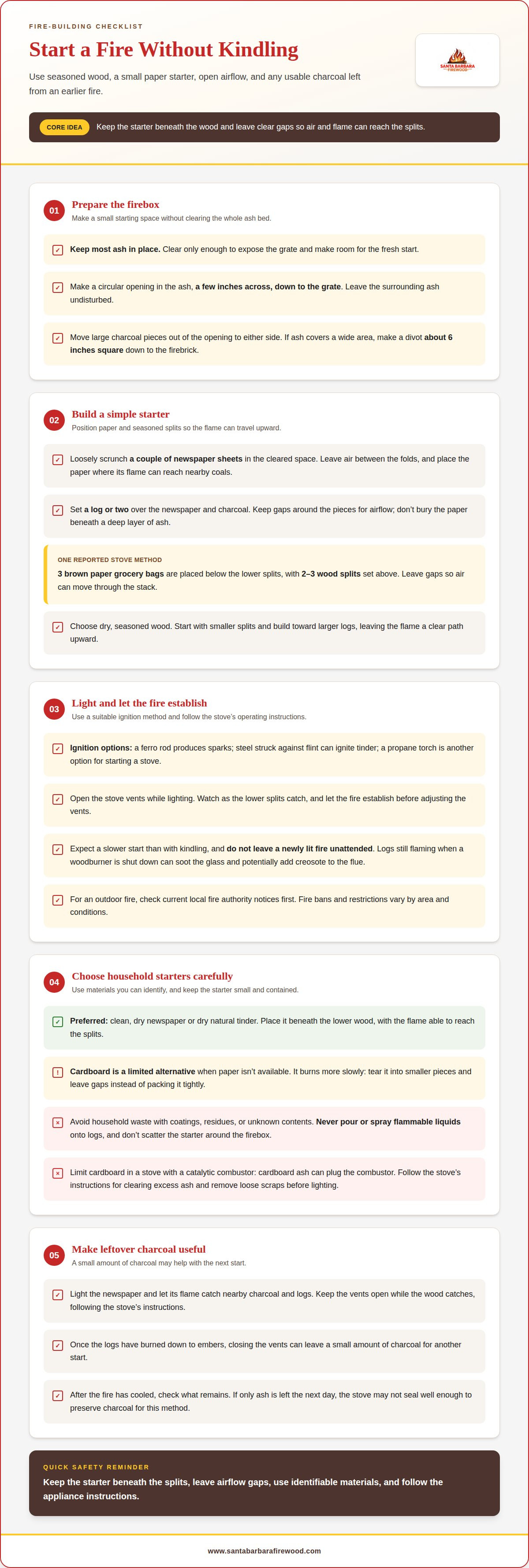
Keep most of the ash bed in place. Clear only enough to expose the grate and make room for a fresh start.
Make a circular opening in the ash, a few inches across, down to the grate. Leave the surrounding ash undisturbed. It provides a bed beneath the new fire, while the opening gives the starter direct access to the grate.
Move any large charcoal pieces that fall into the opening to either side. Place a couple of loosely scrunched newspaper sheets in the cleared space. Position the paper so its flame can reach nearby coals, rather than burying it beneath a deep layer of ash.
Set a log or two over the newspaper and charcoal. Leave space around the pieces for air to move through the fire. If the ash covers a wide area, make a divot about 6 inches square down to the firebrick, then position the starter and logs above it.
Light the newspaper and let its flame catch the charcoal and logs. Keep the stove vents open while the wood catches, following the stove’s operating instructions. Once the logs have burned down to embers, closing the vents can leave a small amount of charcoal for another start.
Check what remains after the fire has cooled. If only ash remains the next day, the stove may not seal well enough to preserve charcoal for this method. When preparing the firebox, avoid scraping out the full ash bed; clear only the space needed over the grate.
What household materials are safe fire starters for a wood fire?
Use clean, dry newspaper as a simple household starter. Loosely scrunch a couple of sheets to leave air between the folds. Place the paper beneath the wood, where its flame can reach the lower pieces. Keep it contained in the firebox, with no loose sheets extending beyond the fire.
Use plain cardboard only if paper isn’t available. Cardboard burns more slowly than paper, so tear it into smaller pieces and leave gaps between them. Don’t pack it into a dense wad, which can restrict airflow and make it harder for the wood to catch.
Limit cardboard in a stove with a catalytic combustor. Cardboard ash can plug the combustor, so don’t use cardboard as a routine substitute for clean paper. Clear excess ash according to the stove’s instructions, and remove loose scraps from the firebox before lighting.
Build the starter around the fire rather than adding more household waste. Put paper or small cardboard pieces under the lower wood, then leave open space for the flame and air to pass through. If the paper burns away before the logs catch, adjust the wood arrangement instead of adding unknown materials. Keep oak firewood ready for your next fire by exploring oak firewood options.
Santa Barbara Firewood
Santa Barbara Firewood helps keep your next fire supplied with oak firewood in several cord sizes. Turn to it when your remaining logs are running low, or when you want to replenish your supply before another fire. The available choices include 1/8 CORD OAK, 1/4 CORD OAK, 1/2 CORD OAK, and FULL CORD OAK.
Choose a quantity that suits your storage space and expected use. A smaller cord size may work better in a limited storage area, while a larger size may suit regular firewood use. Having logs ready gives you fuel for a fire, whether you’re using leftover charcoal or starting with paper.
Contact Santa Barbara Firewood to discuss your oak firewood needs.
Keep Your Next Fire Ready
A dependable fire starts before you strike the match. Keep the setup simple, use materials suited to your stove, and have suitable logs ready. With the right arrangement, how to start a fire without kindling becomes a practical skill rather than a last-minute problem.
When you’re planning ahead, Santa Barbara Firewood offers oak in 1/8 CORD, 1/2 CORD, and FULL CORD sizes. Choose the amount that fits your firewood needs, then keep your next fire within reach.
Contact Santa Barbara Firewood to discuss your oak firewood needs. A little preparation can make your next fire easier to start.
Frequently Asked Questions
Can you start a fire without kindling, and what alternatives work?
Yes. To start a fire without kindling, use a reliable fire starter with dry, seasoned wood arranged to allow airflow. Fatwood is another option; two pieces can help ignite a fire, though it may start more slowly than with kindling. Choose one starter method, position it where the flame can reach the wood, and avoid adding so much material that it blocks airflow.
How do you start a campfire using fire starters and larger wood without kindling?
Place a fire starter beneath small, dry wood splits, then position larger pieces above them with open gaps. Light the starter and let the flame establish before adding more wood. Don’t let larger logs cover the flame completely. If the starter burns out before the splits catch, adjust the stack to improve airflow rather than adding several large logs at once.
How do you build a top-down fire without kindling?
Build a top-down stack with the largest logs at the bottom and smaller splits layered above. Place a fire starter on top of the stack and light it there. As the upper wood burns, heat travels down to the layers below. Leave spaces between pieces for air to circulate, and don’t pack the stack tightly.
How do you start a fire with damp wood when kindling is unavailable?
Damp wood is harder to ignite and may smolder instead of catching cleanly. Select the driest pieces available, then split a log to expose its inner surface. Place that exposed wood near a fire starter, keeping wetter, larger pieces aside until a steady flame develops. If every piece is wet through, expect a difficult start rather than trying to force the fire with extra fuel.
What wood sizes and stacking methods help a fire catch without kindling?
Use smaller splits near the ignition point and reserve thicker logs for the outer or upper layers. Smaller pieces expose more surface to the starter’s heat, while gaps between splits help air reach the flame. Arrange the wood so it won’t collapse over the starter. Add larger pieces only after the smaller wood is burning steadily.
Comments