

How to Tell If Oak Is Seasoned: 5 Practical Checks

What if oak that’s been drying for months still isn’t ready to burn? If you’re wondering how to tell if oak is seasoned, a calendar estimate or weathered appearance alone won’t give you a dependable answer. Oak readiness is a condition you can assess, and damp wood can mean more smoke and a less efficient fire.
This guide explains how to assess oak with a moisture meter and practical visual and sound checks. You’ll learn why testing a freshly split face gives a more useful reading, which signs can support that reading, and what to do if the wood still seems damp. We’ll also cover how to weigh conflicting clues before loading your fireplace or stove. If your own supply needs more drying time, locally delivered seasoned oak can be a practical alternative.
Table of Contents
What Does It Mean for Oak Firewood to Be Seasoned?
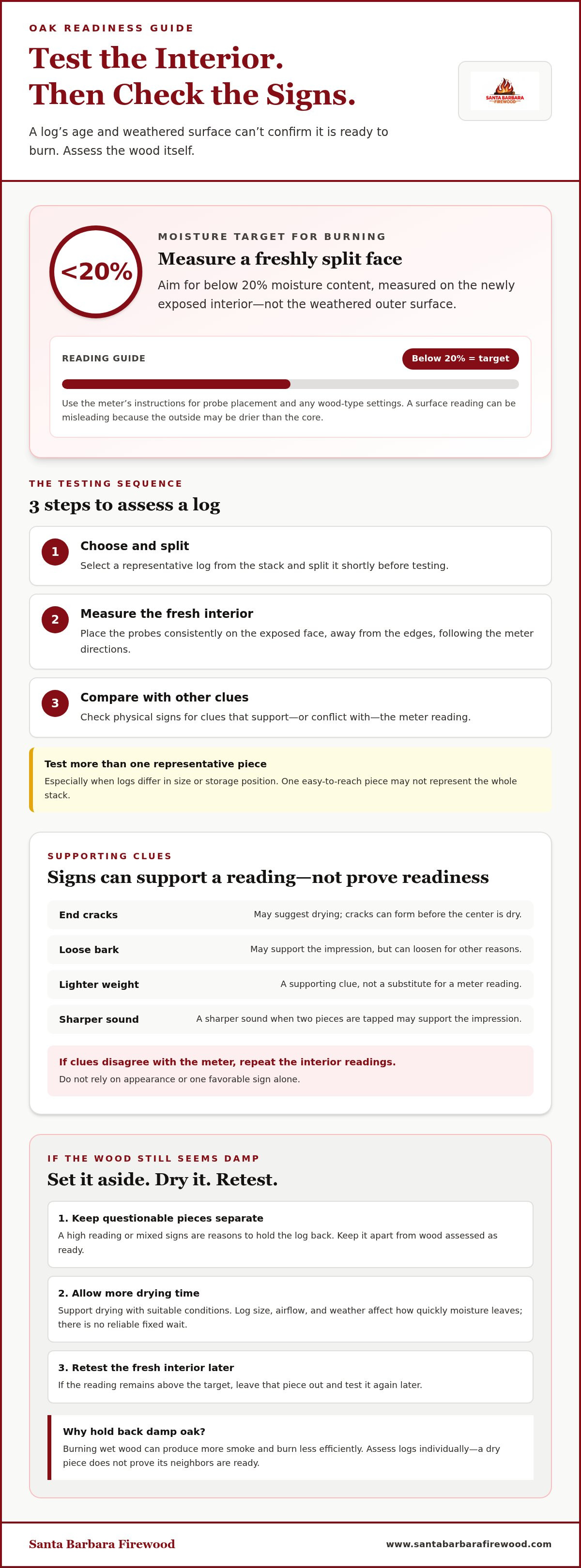
Seasoned oak has lost enough moisture to burn effectively. The word describes its condition, not its age. A log can sit for months and still be damp inside, while a dry-looking surface may conceal moisture at the center. As a general target, firewood should be below 20% moisture content for burning. The overview of seasoned firewood also explains why drying is central to how wood burns.
Oak’s density makes a fixed calendar especially unreliable. Thick rounds and large logs expose less surface area than split pieces, so moisture escapes more slowly. Airflow matters too: a tightly packed stack dries differently from one with space between the rows. Rain exposure, humidity, sunlight, and local weather conditions can also affect drying. How the wood is split and stored is part of its seasoning story.
Why a fixed seasoning timeline cannot prove oak is ready
Two oak logs cut at the same time may not be equally dry. One may be split small and stacked where air can circulate; another may be larger or stored where damp conditions slow moisture loss. The same drying time doesn’t mean the logs are equally ready. Seasoning time alone cannot establish whether a particular oak log is ready.
That’s why learning how to tell if oak is seasoned means checking the wood itself, not relying on a rule such as “dry it for a year.” Treat age and appearance as context, not proof. Assess representative split pieces and use their interior condition to guide your decision.
How to Tell If Oak Is Seasoned: Use a Meter, Then Check the Signs
For a dependable answer to how to tell if oak is seasoned, use a moisture meter first and treat appearance and sound as supporting clues. Follow this sequence:
Choose a representative log from the stack and split it.
Measure the newly exposed interior, following the meter’s instructions.
Check other signs, such as cracks, bark, weight, and sound, for clues that support or conflict with the reading.
The target for firewood is below 20% moisture content. A reading from the outer surface can be misleading because weathered wood may be drier than its core. Test more than one representative piece, particularly if the logs differ in size or storage position. That gives you a clearer picture of the stack than testing only the easiest log to reach.
How to use a moisture meter on a freshly split oak log
Split the log shortly before testing so the measuring surface is fresh. Place the probes consistently on the exposed face, away from the edges, and use the same approach for each sample. Follow the meter directions for probe placement and any settings required for wood type. For burning, aim for below 20% moisture content, measured on a freshly split interior face.
Then compare the result with physical clues. End checks and loose bark can suggest drying, while lighter weight or a sharper sound when two pieces are tapped may also support that impression. But cracks can form before the center is dry, and bark may loosen for other reasons. None of these signs proves readiness on its own. If the clues disagree with the meter, repeat the interior readings rather than relying on appearance alone.
If you need seasoned oak while your own supply continues drying, explore seasoned oak firewood options.
What to Do If Your Oak Firewood Still Seems Damp
If a log’s meter reading is high, or its signs don’t agree, set it aside. Don’t treat loose bark or deep end cracks as proof that the center is dry. Keep questionable pieces separate from wood you’ve assessed as ready, so damp logs don’t get mixed back into the burn pile by mistake.
Give the set-aside oak conditions that support drying, then retest it later. There’s no reliable number of weeks to wait: log size, airflow, and weather all affect how quickly moisture leaves. A new reading from a freshly split interior is more useful than judging whether the outside looks drier. If the result remains above the target, leave that piece out and test it again later.
Should you burn oak that fails the readiness checks?
Use the meter result alongside several physical clues before deciding. If the reading suggests the log is still damp, or the evidence is mixed, hold it back rather than relying on one favorable sign. Burning wet wood can produce more smoke and burn less efficiently. Make the decision log by log: a dry piece in the same stack doesn’t prove its neighbors are ready.
If you need dependable fuel while your own oak continues drying, consider seasoned oak firewood. It’s a practical alternative to rushing questionable wood into the fire. For a better sense of what’s involved in sourcing delivered oak locally, see the local firewood delivery guidance.
Make Your Next Firewood Choice with Confidence
Oak readiness is a property of each log, not a promise made by its age or appearance. Keep wood you’ve assessed separate from pieces that still need attention, and plan your next purchase around when you need fuel. That way, you won’t have to rely on uncertain logs when you want to use your fireplace.
If you’re weighing how to tell if oak is seasoned against the time and effort of drying your own supply, Santa Barbara Firewood offers seasoned live oak and red oak. Delivery and stacking are included at no extra charge, making it easier to plan for the wood you need in Santa Barbara, Ventura, Santa Ynez, Buellton, Los Olivos, and Carpenteria.
Explore seasoned oak firewood and order the amount that fits your needs. With a clear plan, you can feel confident about the wood you choose for your next fire.
Frequently Asked Questions
How long does oak firewood take to season?
There isn’t a dependable fixed seasoning period for every oak log. Starting moisture, split size, airflow, and exposure to weather all affect drying. A thick round may remain damp inside after smaller pieces from the same load are ready. In Santa Barbara, Ventura, Santa Ynez, Buellton, Los Olivos, and Carpenteria, assess the individual wood rather than relying on one calendar estimate.
Why can oak be harder to season than some other firewood?
Oak is dense, so moisture can take longer to escape than it does from less dense wood, especially in a large, unsplit piece. Freshly cut oak can contain around 60% moisture, according to the research for this article. Splitting exposes more surface area, but the core still needs time and suitable drying conditions to lose moisture.
Can I mix partly seasoned oak with dry firewood?
You can place both types in the same fire, but dry pieces don’t make damp oak ready. Partly seasoned logs can still burn inefficiently and produce extra smoke. For better control, keep questionable pieces separate and choose only wood that has passed your readiness checks. That makes it easier to identify which logs are ready for future fires.
Is cracked oak firewood always seasoned?
No. End cracks can form as a log dries, but they don’t show whether moisture remains deeper inside. A split at the exposed end may look pronounced while the center is still damp. If you’re deciding how to tell if oak is seasoned, treat cracks as one clue, not a verdict, and assess the particular log rather than assuming the whole stack is ready.

Comments