
.png)
The Dangers of Creosote Buildup: Protecting Your Santa Barbara Home

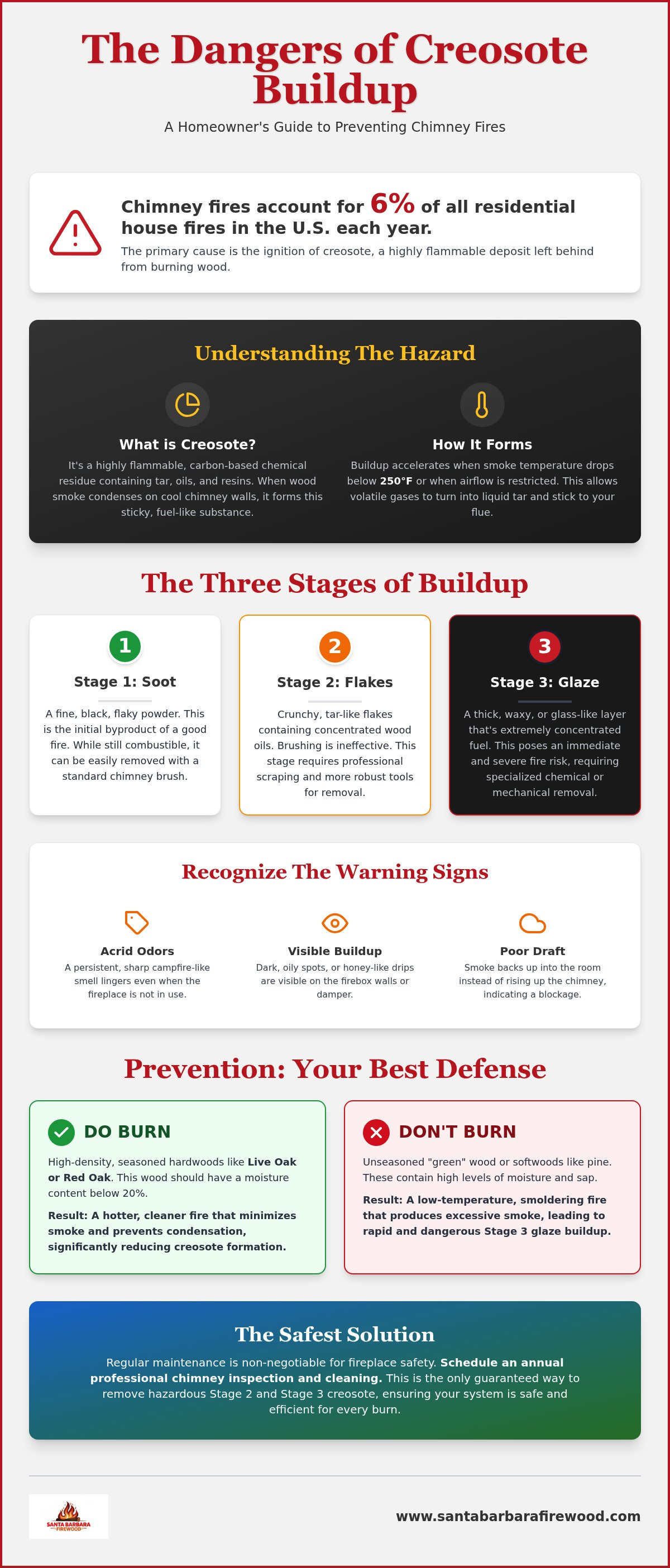
Chimney fires account for 6% of all residential house fires in the U.S. every year. For many Santa Barbara homeowners, the fireplace provides essential warmth, but it often hides a combustible secret. You may have noticed a strange, acrid smell or felt uncertain about your last cleaning date. These are not minor nuisances. Understanding the dangers of creosote buildup is the first step in preventing a structural fire from starting inside your flue.
You deserve total confidence every time you strike a match. This guide shows you how to identify, prevent, and eliminate chemical hazards to keep your fireplace safe and efficient. We will examine the three stages of toxic buildup and explain how burning seasoned oak reduces your risk. Learn to recognize the warning signs and protect your home with professional maintenance and better fuel choices.
Table of Contents
What is Creosote? Understanding the Chemistry of Chimney Buildup
Creosote isn't just a byproduct of your fireplace. It's a highly flammable, carbonaceous chemical residue. When wood smoke hits cool chimney walls, it condenses into a thick, sticky layer. This substance contains tars, oils, and complex resins. These compounds become increasingly volatile as they accumulate over weeks and months. Effectively, creosote acts as a distilled fuel source that remains in your chimney long after the fire is out. Burning unseasoned wood accelerates this dangerous condensation process. Restricted airflow makes the problem worse. Understanding What is Creosote? helps you realize why a "dirty" chimney is actually a loaded fuel tank. The dangers of creosote buildup are progressive. Every fire adds a new layer of fuel to your flue.
How Creosote Forms: The Role of Temperature and Airflow
Temperature control is your primary defense against chimney fires. Smoke must stay above 250 degrees Fahrenheit to exit the flue without condensing. If the temperature drops below this threshold, gases turn into liquid tar. Santa Barbara's coastal humidity often creates cold chimney liners, even during the day. These cold surfaces rapidly cool rising smoke and trigger immediate buildup. Restricted airflow also creates problems. Closed dampers or oversized flue pipes slow down smoke movement. This delay gives volatile tars more time to stick to your masonry, significantly increasing the dangers of creosote buildup. Burning dense, seasoned oak ensures a hotter, cleaner burn that pushes smoke out before it can settle.
The Three Stages of Creosote: Identifying the Hazard Levels
Creosote doesn't look the same throughout its lifecycle. It evolves. Understanding these phases is critical to managing the dangers of creosote buildup before they become lethal.
Stage 1: A fine, black, sooty powder. This is the byproduct of a typical fire. While easily brushed away, it remains a combustible hazard. If you see this, it's time for a routine sweep.
Stage 2: Crunchy, tar-like flakes. These contain concentrated wood oils. Brushing won't work here. You need professional scraping to strip these deposits from the masonry.
Stage 3: A critical emergency. This thick, waxy, or glass-like glaze is the most flammable form of residue. It acts like a layer of hardened fuel inside your flue.
Stage 3 poses the immediate threat of a chimney fire. According to a University of Kentucky study on creosote, controlling these thermal conditions is vital for home safety. If your chimney reaches this level, the risk of a high-intensity fire increases exponentially. Removing it requires specialized chemicals or heavy-duty mechanical tools. Don't light another fire if you suspect glazed buildup.
Recognizing the Warning Signs of Dangerous Accumulation
You don't always need to climb the roof to spot trouble. Watch for these red flags: acrid, campfire-like odors lingering when the fireplace is cold. Look for dark, oily spots or "honey-like" drips on the firebox walls. If you experience a reduced draft or smoke backing into the room, you have a significant blockage. These signs indicate that the dangers of creosote buildup have reached a critical point. Professional chimney cleaning is the only way to ensure your system is safe for the next burn.
Prevention and Removal: Maintaining a Safe Fireplace on the Central Coast
Professional chimney cleaning services are the primary solution for removing Stage 2 and Stage 3 buildup. Standard brushes won't touch hardened glaze. You need specialized tools to strip this internal fuel source from your flue walls. Regular maintenance prevents the heat of a fire from igniting the chemical residue within the masonry. Annual inspections in Goleta and Santa Barbara are critical. Even if you only burn fires occasionally, the dangers of creosote buildup remain a persistent threat. Coastal dampness often interacts with soot, creating a corrosive paste that damages liners over time.
The Role of Seasoned Oak in Creosote Prevention
Fuel choice is your best defense. Seasoned wood with less than 20% moisture burns hotter and cleaner. This high temperature prevents smoke from condensing into tar before it exits the flue. High-density Live Oak or Red Oak is the superior choice for local homeowners. It provides a long, steady heat that keeps chimney temperatures stable and reduces the amount of unburned gases escaping into the atmosphere.
Avoid softwoods or "green" wood at all costs. These materials contain high sap and moisture levels. They're the leading causes of rapid Stage 3 creosote formation. These woods smolder rather than burn. Low-temperature combustion creates the perfect environment for glazed buildup to take hold. Order a 1/2 cord or 1/4 cord of seasoned oak for a safer winter season. Using quality wood reduces the dangers of creosote buildup from the very first spark.
Secure Your Hearth for the Season
Proactive maintenance is the only way to eliminate the dangers of creosote buildup. We've explored how temperature and airflow transform wood smoke into a volatile fuel source. Identifying the three stages of accumulation allows you to act before your chimney reaches a critical hazard level. Relying on seasoned oak with low moisture content remains your best defense against rapid residue formation.
Santa Barbara Firewood has served Santa Barbara and Ventura since 2020. We are specialists in clean-burning seasoned oak and professional maintenance. Expert stacking and delivery are included with every order to keep your home warm and protected. Schedule your professional chimney cleaning or order seasoned oak today. Don't leave your safety to chance. Enjoy your fireplace with the peace of mind that comes from a clean, efficient flue.
Frequently Asked Questions
Can I remove creosote myself with a chimney brush?
You can remove Stage 1 soot with a standard brush. However, Stage 2 and 3 deposits are bonded to the masonry. These require professional-grade scrapers and chemical treatments that consumer tools cannot match. Attempting a DIY clean on glazed creosote often leaves the most dangerous fuel behind. Our professional chimney cleaning ensures every layer of combustible residue is safely eliminated.
How often should I have my chimney cleaned in Santa Barbara?
Schedule a professional cleaning at least once a year. Even occasional burners in Santa Barbara or Ventura should have an annual inspection. Coastal humidity can cause soot to clump and corrode your liner. If you burn more than one cord of wood during the winter, you may need a mid-season sweep. Regular maintenance is the only way to mitigate the dangers of creosote buildup.
Do creosote sweeping logs actually work?
Sweeping logs contain chemicals that help dry out Stage 3 glaze. They make the residue more brittle and easier to remove during a professional sweep. However, they don't actually remove the fuel from your chimney. Relying solely on these logs is a common mistake. You still need a physical cleaning to clear the blockage and ensure the flue is safe for use.
What happens if a chimney fire starts from creosote buildup?
A chimney fire fueled by creosote can reach temperatures exceeding 2,000 degrees Fahrenheit. This intense heat can crack masonry or melt metal liners. Flames often shoot from the top of the chimney or spread into the home's framing. These fires are high-intensity events that often lead to total property loss. Understanding the dangers of creosote buildup helps you prevent these catastrophic structural failures.


Comments