
.png)
Seasoned vs. Unseasoned Firewood: Why Your Choice Matters for Safety and Heat

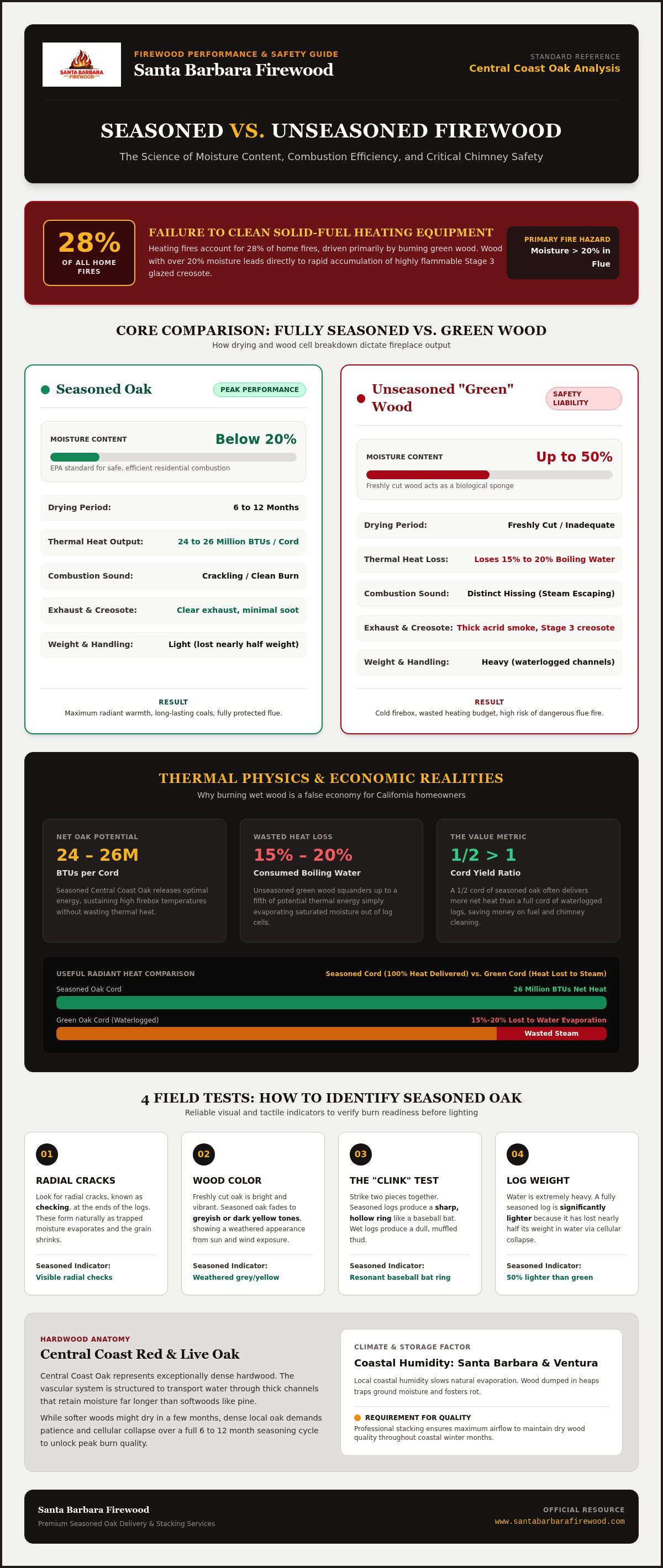
Failure to clean solid-fuel heating equipment accounts for 28% of all home heating fires. Most of these disasters start with one bad choice: burning green wood. You want a hot, crackling fire to end the day. Instead, you're fighting thick smoke and logs that hiss. It's a waste of time and money. Understanding the difference between seasoned vs unseasoned firewood is the only way to ensure a safe, efficient burn. This guide breaks down moisture content and the dangers of stage three creosote buildup. We'll show you how to identify high-quality oak that delivers maximum heat with minimal smoke. Properly seasoned oak delivers up to 26 million BTUs per cord. Unseasoned wood wastes that energy just trying to evaporate internal water. Protect your chimney. Keep your home warm. Get the facts on fuel performance before you light your next match.
Table of Contents
The Science of Moisture: What Defines Seasoned vs. Unseasoned Firewood
The core difference in seasoned vs unseasoned firewood lies in moisture content. Seasoned wood has undergone a rigorous drying period of 6 to 12 months. This timeframe allows the internal moisture to drop below 20%. In contrast, unseasoned "green wood" often contains up to 50% water by weight. Burning green wood is effectively trying to set a bucket of water on fire.
The process of wood drying and seasoning involves the breakdown of wood cells. This cellular collapse allows trapped water to migrate to the surface and evaporate. When comparing seasoned vs unseasoned firewood, the density of the species matters most. Central Coast Oak presents a unique challenge. Red and Live Oak are exceptionally dense hardwoods. Their high cell density means they retain water longer than softwoods. While pine might dry in a few months, local oak requires patience to reach peak burn quality.
Why Green Wood is a Fireplace Liability
Freshly cut oak is a biological sponge. Its vascular system is designed to transport water; those channels remain saturated long after the tree is felled. When you toss green wood into a fire, you'll hear a distinct hissing sound. This isn't the wood burning. It's internal water boiling into steam. This steam robs the fire of thermal energy and lowers the firebox temperature significantly.
Local climate also dictates the drying timeline. The coastal humidity in Santa Barbara and Ventura can slow natural evaporation. Without proper stacking and airflow, wood remains damp and prone to rot. Santa Barbara Firewood manages this logistics cycle locally. We ensure every cord delivered is ready for immediate, high-heat combustion. Our process eliminates the guesswork for the homeowner.
Performance Comparison: Heat Efficiency and Fireplace Safety
Efficiency starts with physics. When comparing seasoned vs unseasoned firewood, the thermal gap is massive. A cord of seasoned oak delivers between 24 and 26 million BTUs. Green wood loses approximately 15% to 20% of its potential heat just boiling off internal water. This energy never warms your room; it escapes as wasted steam. Seasoned oak provides a consistent, long-lasting burn that maximizes every dollar spent.
Safety is the primary concern for California homeowners. Unseasoned wood creates thick, acrid smoke. This smoke contains unburned gases that condense inside your flue as creosote. According to EPA guidelines on seasoned wood burning, moisture above 20% is the leading cause of dangerous creosote buildup. Glazed creosote is highly flammable. It acts as fuel for chimney fires that can destroy a home in minutes. Clean-burning fires require dry wood to keep exhaust clear and flues safe.
The Economic Reality of Burning Wet Wood
Buying green wood is a false economy. The math is simple. A 1/2 cord of seasoned oak often delivers more net heat than a full cord of waterlogged logs. You pay for the weight of the water, then pay again in lost thermal output. There's also a hidden cost. Burning wet logs forces you to schedule professional chimney cleaning more frequently to strip away tarry Stage 3 creosote. Choosing seasoned vs unseasoned firewood saves money on both maintenance and raw fuel. It's the only logical choice for a high-performance home.
How to Identify Seasoned Oak and Maintain Your Supply
Identifying seasoned vs unseasoned firewood requires a trained eye. Look for radial cracks, known as checking, at the ends of each log. These cracks form as moisture leaves the wood fibers and the grain shrinks. According to Penn State Extension firewood seasoning recommendations, these visual cues are reliable indicators of readiness. Color is another giveaway. Freshly cut oak is bright and vibrant. Seasoned oak fades to greyish or dark yellow tones. It looks weathered because it has spent months drying in the sun.
Use the "Clink" test. Strike two pieces together. Seasoned logs produce a sharp, hollow ring, much like a baseball bat hitting a ball. Green logs result in a dull, muffled thud. You'll also notice the weight difference immediately. Water is heavy. A seasoned log is significantly lighter than a green one because it has lost nearly half its weight in moisture. This weight loss makes handling easier and burning more efficient.
Professional Stacking and Local Delivery
Proper storage is vital in the coastal air of Ventura and Santa Barbara. Wood left in a heap will trap moisture and rot, even if it was delivered dry. Professional stacking ensures maximum airflow, which maintains the quality of your fuel throughout the winter. We provide a Santa Barbara Firewood stacking service to handle this labor for you. For occasional burners, a 1/4 cord of oak is the ideal inventory size. It ensures you have enough for the season without needing excessive storage space. This keeps your supply fresh, dry, and ready for the hearth.
Secure Your Home's Heat and Safety
Choosing the right fuel is the difference between a smoky, dangerous fireplace and a high-heat sanctuary. You now know the physics of moisture and the visual cues of quality oak. The debate of seasoned vs unseasoned firewood isn't just about heat; it's about protecting your home from creosote fires. Santa Barbara Firewood has served as the local Live Oak and Red Oak experts since 2020. We understand the specific needs of Central Coast homeowners.
We don't just drop wood in your driveway. Our included stacking service ensures proper airflow to maintain seasoning throughout the season. Don't settle for hissing, wet logs that waste your money and compromise your flue. Order Seasoned Oak Firewood Delivered and Stacked today to experience the premium standard of Central Coast heating. Enjoy the peace of mind that comes with a clean, efficient burn.
Frequently Asked Questions
Can I burn unseasoned wood if I mix it with seasoned wood?
Mixing green wood with dry logs is a mistake. The unseasoned wood draws heat from the seasoned pieces just to evaporate its internal moisture. This lowers the overall firebox temperature below the 1,100°F required for clean combustion. You'll end up with a smoldering fire and excessive smoke. Always prioritize seasoned vs unseasoned firewood choices to maintain efficiency and fireplace safety.
How long does it take to season Oak firewood in Santa Barbara County?
Oak is a dense hardwood that requires significant time to dry. In Santa Barbara County, the seasoning process typically takes 12 to 24 months. Our coastal humidity often slows this timeline compared to inland areas. Santa Barbara Firewood manages this multi-year cycle for you. We ensure every cord delivered to Ventura or Santa Barbara is fully cured and ready for use.
Does unseasoned wood cause more chimney soot?
Yes. Burning unseasoned wood is the primary cause of rapid creosote accumulation. When moisture levels exceed 20%, the fire produces thick smoke that condenses on cold flue walls. This creates tarry, flammable soot. Failure to clean this buildup accounts for 28% of home heating fires. We provide professional chimney cleaning to remove these hazards and ensure your fireplace remains safe.
Is kiln-dried wood better than seasoned wood?
Kiln-dried wood reaches low moisture levels faster, but properly air-seasoned oak remains the premium standard for local fireplaces. Seasoned wood achieves the necessary sub-20% moisture content through natural evaporation. It provides the same high heat output and clean burn without unnecessary industrial processing. Our seasoned Red and Live Oak deliver up to 26 million BTUs per cord for maximum performance.


Comments