

Avoiding Green Wood Scams: Spot Fees and Protect Payments

A professional-looking firewood listing can still be fake. Avoiding green wood scams starts with pausing before you pay, checking the seller’s details independently, and refusing gift-card or money-transfer requests. Pressure to pay upfront is a reason to slow down, not rush.
Buying firewood online should be straightforward, with clear information about the wood, delivery, and payment. This article explains how to spot warning signs, assess a seller’s online presence, and protect your money and personal information before ordering. You’ll also learn what to do when a message or payment request doesn’t feel right.
Table of Contents
1. How can you avoid becoming a victim?
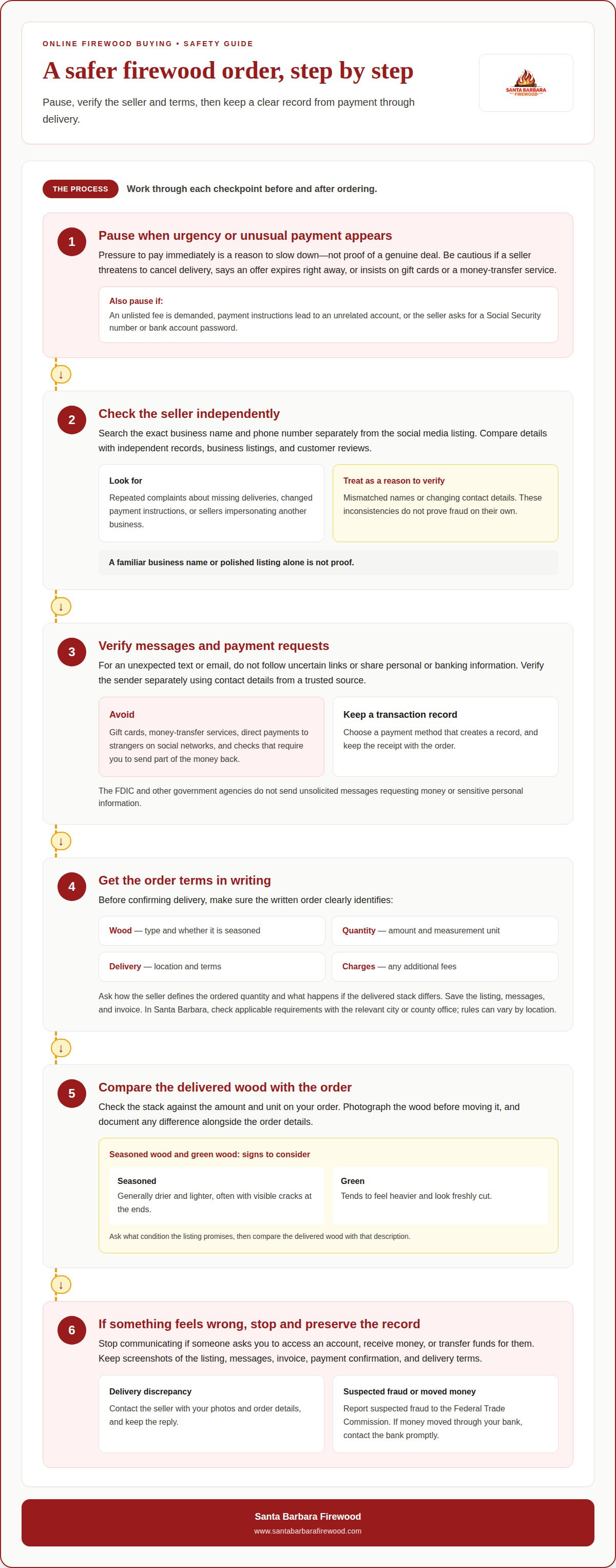
To avoid green wood scams, take time to check the seller before paying. Read comments on social media listings for buyer warnings. Search the business name and compare its details across independent sources. Scammers can copy real company information, so a familiar name or polished listing alone isn’t proof. Pressure to pay immediately is a reason to pause, not evidence of a genuine deal.
For unexpected texts or emails, don’t share personal or banking information or follow links. Verify the sender separately using contact details from a trusted source. The FDIC and other government agencies don’t send unsolicited messages requesting money or sensitive personal information. If someone asks you to receive money, access a bank account, or transfer funds for them, stop communicating. If you’ve already moved money, contact your bank.
For firewood sales, quantities, and delivery in Santa Barbara, don’t assume rules from elsewhere apply locally. Check applicable requirements with the relevant city or county office, and keep a written order that states the wood type, quantity, and delivery terms.
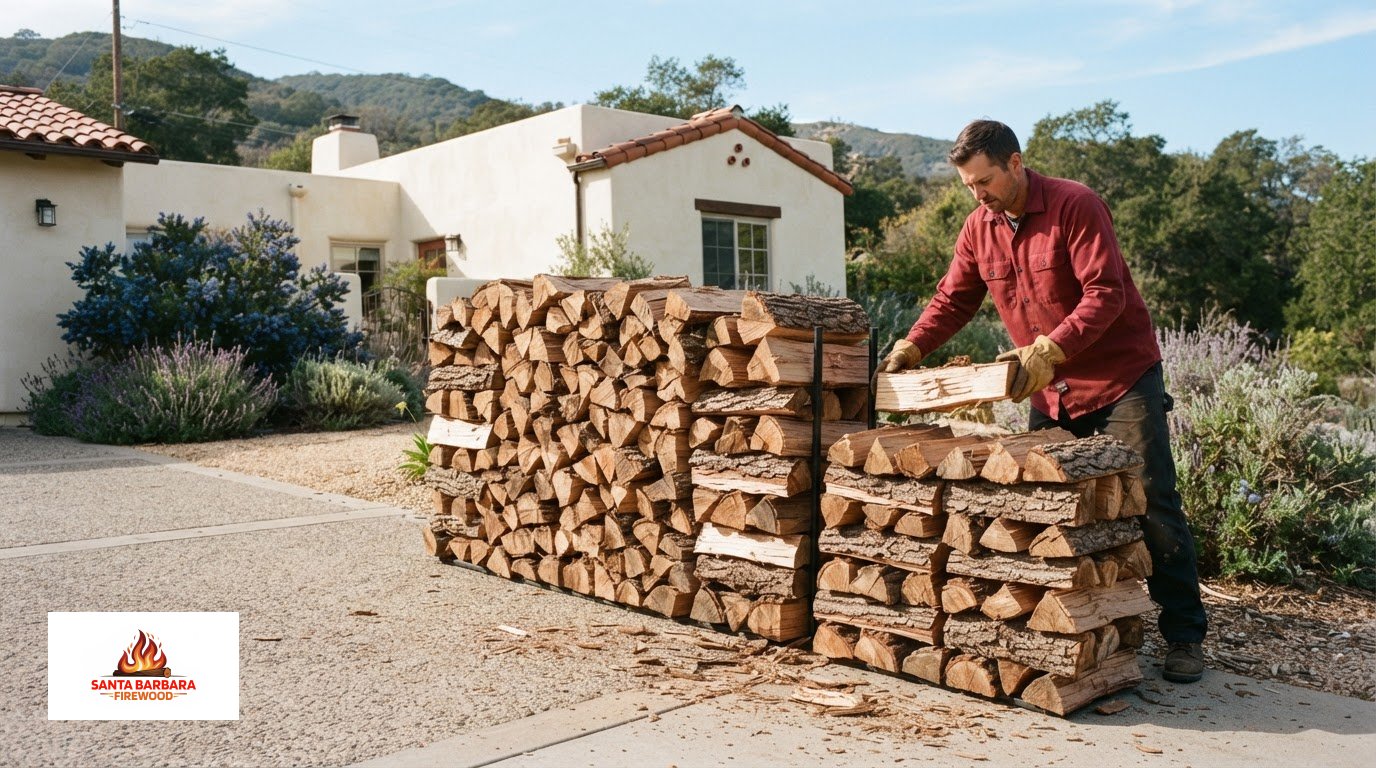
To verify a delivered quantity, compare the stack with the unit and amount on your order. Photograph it before moving the wood, and document any difference alongside the order details. This gives you a clear record when discussing a delivery discrepancy.
Firewood prices and applicable requirements can vary by location and season. Wood type, order size, delivery distance, and seasonal demand can affect a quote. Compare the written terms, not just the headline price, so the quantity and delivery conditions are clear before you pay.
2. Recognizing upfront-fee requests
An upfront payment doesn’t prove fraud, but review the request before paying. A legitimate seller should identify the firewood, quantity, delivery terms, and payment method clearly. Be cautious if someone demands an unlisted fee or won’t explain what it covers. Save the listing, messages, and invoice to preserve a record of the agreed terms.
Pressure is a warning sign. Scammers may claim an offer expires immediately, threaten to cancel delivery unless you pay at once, or insist on gift cards or a money-transfer service. Don’t let urgency replace basic checks. Pause and contact the seller using details you found independently, not a number or link in a suspicious message.
Requests for unnecessary personal information can also signal trouble. A firewood seller shouldn’t need your Social Security number or bank account password to arrange an order. Never deposit a check and send part of the money back. If someone asks you to receive or transfer funds, stop. If you’ve already moved money, contact your bank.
Look for inconsistencies: the seller’s name differs between the listing and invoice, contact details change during the conversation, or payment instructions lead to an unrelated account. These details don’t prove fraud on their own, but they’re reasons to pause and verify independently. Keep copies of the offer and payment request.
To distinguish seasoned wood from green wood, inspect the ends and consider the weight. Seasoned pieces are generally drier and lighter, often with visible cracks at the ends; green wood tends to feel heavier and look freshly cut. Ask what condition the listing promises, then compare the delivered wood with that description.
3. Consumer precautions against online wood scams
Before ordering, search the seller’s exact business name and phone number separately from the social media listing. Compare the details with independent records, business listings, and customer reviews. Look for repeated complaints about missing deliveries, changed payment instructions, or sellers impersonating another business. Mismatched names are a reason to pause, not proof of fraud by themselves.
Choose a payment method that creates a transaction record, and keep the receipt with your order. Avoid gift cards, money-transfer services, and direct payments to strangers on social networks. Never deposit a check and send part of the money back. If a seller asks for personal information or directs you to a link in an unexpected email, verify the request through another channel first.
Before confirming delivery, get the key terms in writing: wood type, whether it is seasoned, quantity and measurement unit, delivery location, and any additional charges. Ask how the seller defines the ordered quantity and what happens if the delivered stack differs. Clear answers make it easier to compare the listing with the delivered load.
Keep screenshots of the listing, messages, invoice, payment confirmation, and delivery terms. Photograph the wood before moving it, and record any shortfall beside the order details. Contact the seller with that evidence and keep the reply. If you suspect fraud, report it to the Federal Trade Commission. If money moved through your bank, alert the bank promptly.
Santa Barbara Firewood: 1/8 Pizza Wood
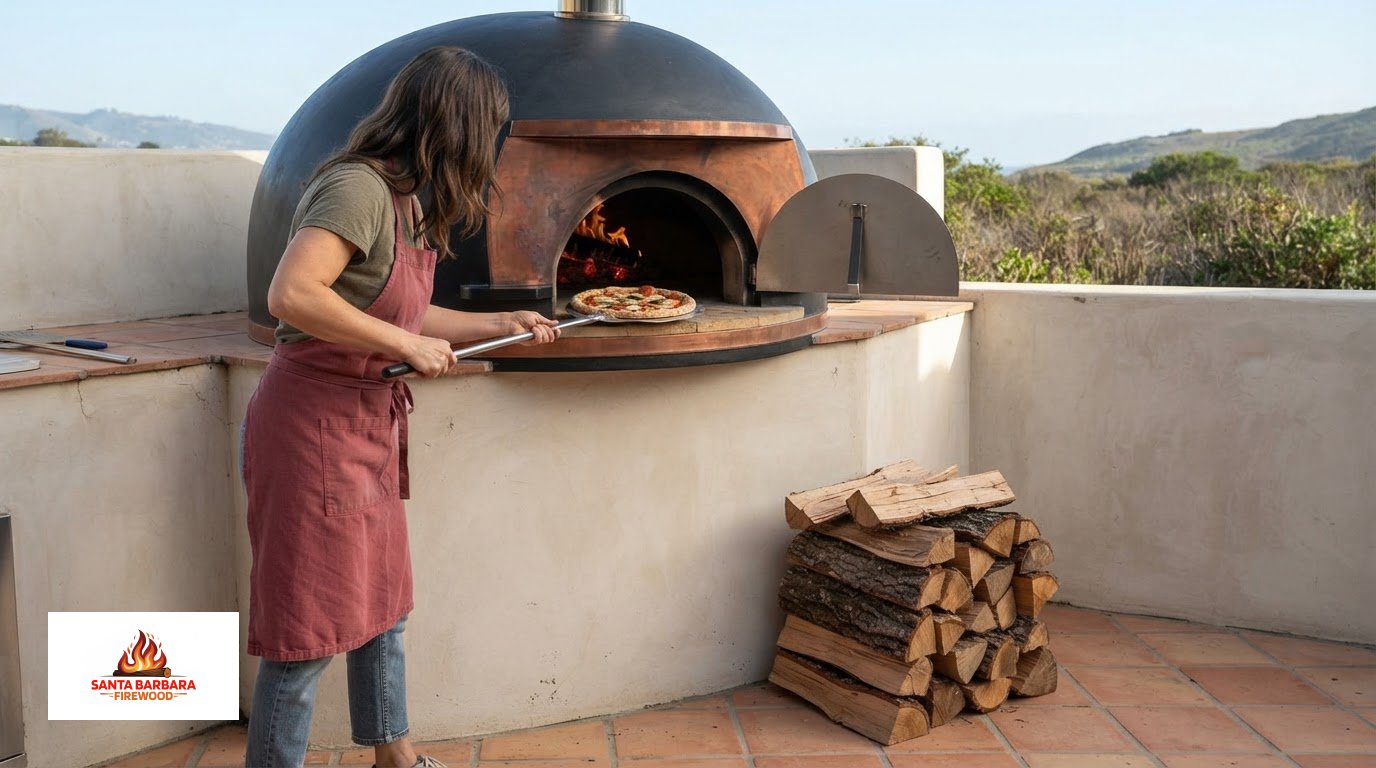
Santa Barbara Firewood offers 1/8 Pizza Wood for customers looking for firewood for pizza cooking. After reviewing seller details and payment terms, use the same clear-order approach here: identify the product you want and make sure the order reflects it. Keep your order information and payment record together for reference.
Choose this option if pizza wood suits your needs. The product name identifies a specific item without making assumptions about its wood type, cut, or performance. Review the order information before purchasing, and keep a copy of the confirmation.
For questions about 1/8 Pizza Wood, contact Santa Barbara Firewood.
Make your next firewood order with confidence
Put your precautions into practice with a clear choice that matches your needs. Santa Barbara Firewood offers 1/2 CORD OAK, FULL CORD OAK, and 1/8 CORD OAK. Select the order that suits your plans, and keep its details handy as you complete your purchase.
A thoughtful buying process is the practical next step in avoiding green wood scams. Take the time to choose the right firewood option and proceed with confidence. Explore your firewood options and move forward with a straightforward order.
Frequently Asked Questions
How can you avoid becoming a victim?
Reduce your risk by separating a seller’s claims from details you can verify independently. For an online listing aimed at households in Santa Barbara, Ventura, Santa Ynez, Buellton, Los Olivos, or Carpinteria, save the seller’s name and listing before contacting them. If a payment dispute arises, keep messages and receipts together, contact your bank promptly about unauthorized activity, and report suspected fraud to the Federal Trade Commission.
How can you avoid green scams?
Check the exact offer and the business behind it before sharing information or paying. Green-themed scams can involve misleading environmental claims, not just firewood. Be cautious if a stranger offers a deal through social media, requests direct payment, or asks you to open or use a bank account. Verify unexpected claims through a separate trusted channel, and don’t rely on links in unsolicited messages.
What are common green wood scams involving firewood sales?
Common examples include fake online firewood listings for wood that never arrives, sellers impersonating a real business, and false documents intended to make a seller look established. A scammer may advertise one kind or quantity of wood, then avoid clear written terms about what will be delivered. Preserve the listing and order details so you can compare the seller’s claims with the transaction.
What are warning signs of firewood delivery and payment scams?
Watch for sellers who change payment details during a transaction, demand an unusual payment method, or pressure you to pay before answering basic questions about the order. A delivery promise without a clear wood type, quantity, or location can also make a dispute harder to resolve. Be especially cautious if the seller asks you to deposit a check and return part of the money.
What state and local rules apply to firewood sales, weights, and delivery?
Rules vary by location, so check applicable requirements with the relevant city or county office. Keep a written order that states the wood type, quantity, and delivery terms.
Comments