

How to Store Firewood With Good Airflow and Cover

A cover protects firewood from rain, but wrapping the whole stack can trap moisture and limit airflow. To understand how to store firewood, raise it off the ground, stack it loosely in an airy spot, and cover only the top outdoors. Leave the sides open so air can move around the wood.
It’s reasonable to wonder whether firewood belongs indoors, especially when rain threatens an outdoor stack. The answer depends on the wood’s condition and how much you need close at hand. This guide covers where to place a stack, how airflow helps it dry, when to use a cover, and ways to limit moisture. You’ll also learn what to consider before bringing wood inside, so your setup protects the fuel without trapping dampness.
Table of Contents
Does Firewood Need to Be Covered?
Cover the top of an outdoor stack, not the sides. A tarp over no more than the top third sheds rain and snow while leaving the cut ends exposed. Secure it against the wind. A practical approach to how to store firewood shields the pile from precipitation without blocking the airflow that carries moisture away.
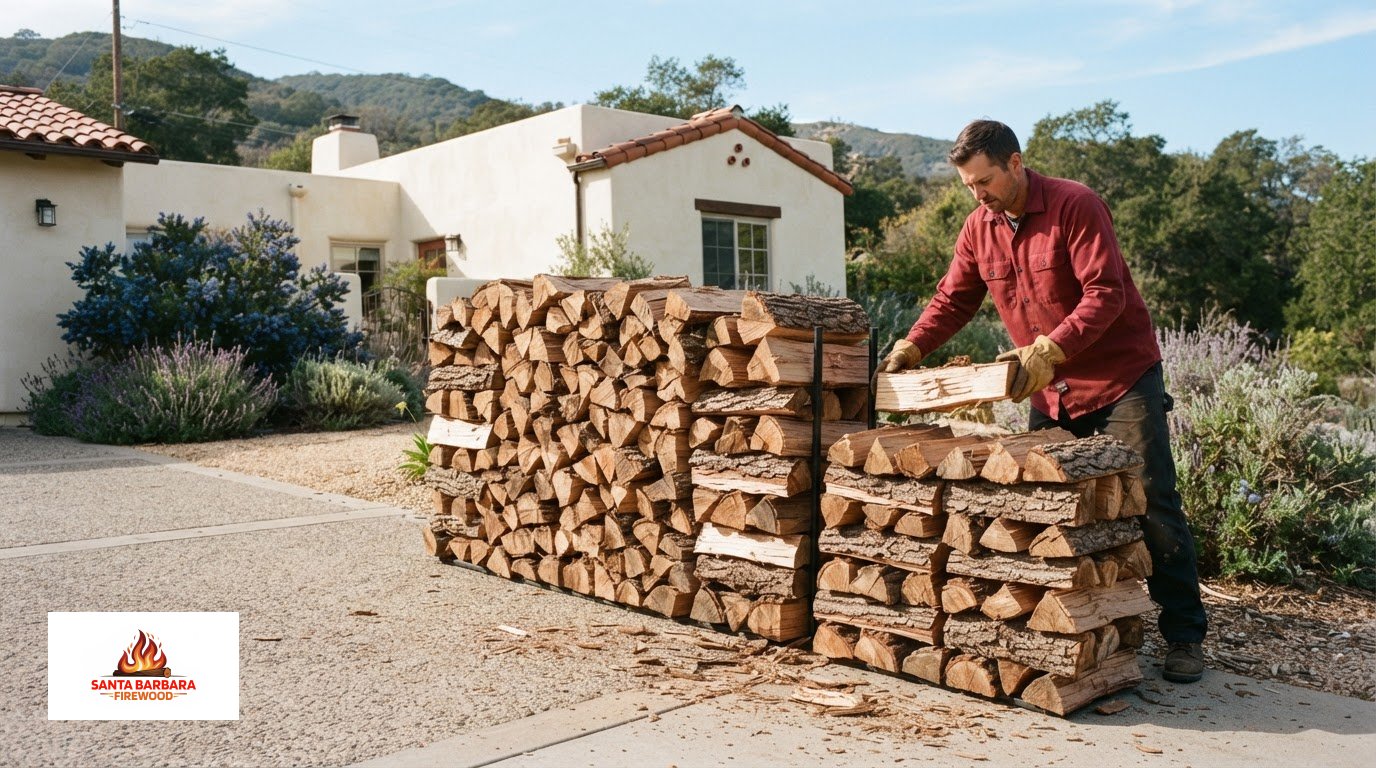
Keep the stack raised off the ground and a few inches from walls. These gaps help air circulate around the logs and reduce contact with damp surfaces. Stack pieces loosely, leaving space between rows. Keep the pile no higher than four feet, and don’t pack logs tightly just to fit more into one spot.
Choose a stable stacking pattern that leaves room for air. In the American method, arrange split logs in parallel rows with small gaps between pieces. For the Criss Cross method, start with treated two-by-fours. Build each end pillar from three to four logs arranged side by side, crossing the layers for support; the described pillars reach 12 rows high.
Local rules for moving firewood to limit invasive pests vary by area. Before transporting wood across local boundaries, check applicable state or local guidance. To keep firewood dry, combine an elevated base, open sides, and a top cover. Drying time varies, and airflow and rain protection can help firewood dry. To discourage termites, ants, and rodents, keep stacks away from soil and walls, and inspect them regularly. Knowing how to store firewood also means watching for pest activity around the pile.
Choosing a well-ventilated storage location
Choose a site that allows airflow throughout the year and keeps the stack safely away from buildings. Consider wind exposure, ground conditions, winter weather, and fire risk before deciding where and how to store the wood.
Select an Airy Storage SpotChoose an open location where prevailing breezes can reach the stack, rather than a tight corner between walls or dense shrubs. Raise the wood on a rack, pallets, or rails above grass or dirt. A concrete slab, patio pavers, or a vapor barrier can also reduce ground moisture. Keep the pile at least three to five feet from your home’s exterior to allow air circulation. Avoid placing it against a fence or siding, where dampness and pests can go unnoticed.
Consider a Storage ShedPlan a wood storage shed with open sides or vents, a roof that directs rain away, and a raised base. Air needs a route through the structure, so avoid enclosing the stack tightly. Sketch the shed around the amount of wood you intend to keep, leaving room to access and rotate the pile. In winter weather, a roof limits direct exposure to rain or snow, while open sides preserve ventilation.
Place the main stack away from the house and garage to reduce fire exposure. The National Fire Protection Association recommends storing firewood at least 30 feet from a home to reduce the risk of fire spreading to the residence. Keep access paths clear so the pile remains easy to reach without stacking wood against a building.
Use separate stacks for wood at different stages of seasoning. Mark the oldest pile and use it first, keeping newer wood from getting buried. For local firewood information relevant to Santa Barbara, Ventura, Santa Ynez, Buellton, Los Olivos, and Carpenteria, review firewood details.
Covering firewood to reduce moisture
Match the cover to the weather. Outdoors, shield firewood from rain and snow without wrapping the stack completely. Leave the sides open so air can reach the logs and carry moisture away. A tightly covered pile can hold damp air against the wood instead of helping it dry.
Check the cover after storms. Make sure rain runs off instead of pooling on the stack, and adjust any loose areas that could trap water against the logs. Keep the ends exposed. This protects the wood from direct precipitation while preserving airflow through the pile.
Measure moisture before bringing wood indoors. Firewood should have moisture content below 20% for clean burning. Use a moisture meter on a freshly split face, not the weathered outer surface. Oak can take two years to dry, so a dry-looking exterior alone doesn’t establish that the center is ready.
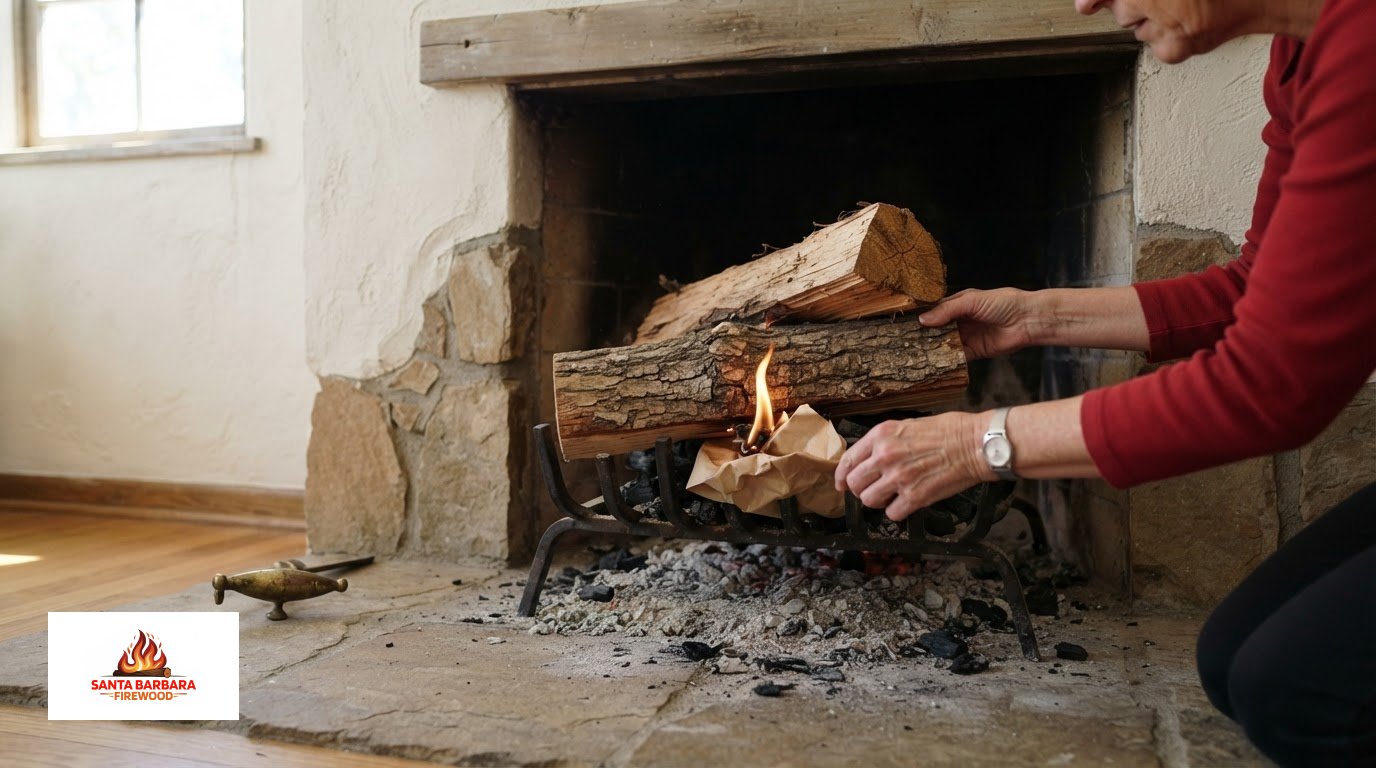
Keep indoor storage limited to kiln-dried wood, and place it away from heat sources. Kiln drying is intended to eliminate fungus and pests, while an indoor basket or bin can hold the amount you need close to the hearth. Don’t use a living area as a long-term drying space for damp wood.
For your next supply, plan a firewood order around the space you can store properly.
Santa Barbara Firewood
Santa Barbara Firewood helps you plan a supply that fits your storage space and seasonal needs. Choose from oak in 1/8, 1/4, 1/2, or full cord quantities. Delivery and stacking are included, helping you get the wood placed for organized outdoor storage.
Before ordering, consider where the stack will go, how much room it needs for airflow, and whether you can protect the top from rain. A smaller quantity may suit limited storage space, while a larger cord may fit a household with a dedicated, well-ventilated area. Choose an amount that fits your available space and expected use.
For oak firewood sized to your storage plans, contact Santa Barbara Firewood.
Plan Your Next Firewood Supply
Plan your next firewood order before your current supply runs low. Estimate how much you expect to use, then match that amount to the space you can dedicate to storage. A simple seasonal note can help you plan ahead and avoid ordering more wood than your setup can hold.
A practical routine for how to store firewood starts by treating storage capacity as part of the order, not an afterthought. Consider how household use changes from season to season, and leave enough room to manage your supply comfortably. This makes it easier to keep your storage organized as your needs change.
When you’re ready to plan your next supply, contact Santa Barbara Firewood today. Take the next step with a plan that fits your home.
Frequently Asked Questions
Can You Store Firewood Indoors?
Yes, but limit indoor storage to kiln-dried wood and the amount you’ll use soon. A basket or bin can hold a few days’ supply near the fireplace. Keep it away from heat sources, and don’t use a garage or living area to store damp logs long term. This helps prevent moisture from lingering indoors.
When is it dry enough?
Firewood is ready for clean burning when its moisture content is below 20%. A moisture meter gives a useful reading on a freshly split face, which reveals the wood’s interior rather than its weathered surface. Dry pieces may also feel light for their size, show cracks at the ends, and make a clear ringing sound when knocked together.
How should firewood be stacked for proper airflow and drying?
Stack pieces loosely so air can pass between logs instead of trapping dampness. Leave space between rows, and avoid making a tall, unstable pile: stacks should be no higher than four feet. For stability, cross the logs at the ends or build orderly rows. Use older wood first so stored pieces don’t remain untouched.
Should firewood be stored indoors or outdoors?
Store most firewood outdoors while it dries, then bring in only a small amount for immediate use. Reserve indoor storage for kiln-dried wood. For homes in Santa Barbara, Ventura, Santa Ynez, Buellton, Los Olivos, and Carpenteria, arrange the main supply so it has room to dry, with a small, ready-to-use amount inside.
How far from a house should firewood be stored to reduce fire and pest risks?
The National Fire Protection Association recommends storing firewood at least 30 feet from a home to reduce the risk of fire spreading to the residence. To make the pile less inviting to pests, keep it raised above soil, away from walls, and easy to inspect. Remove old debris around the stack and watch for signs of insects or rodents.

Comments