

Keeping your home warm with a fireplace: how zone heating works

A fireplace can warm a room, but it usually can’t heat an entire house evenly. Keeping your home warm with a fireplace works best as zone heating: directing warmth to the room you’re using rather than expecting it to reach every space. Traditional open fireplaces can send much of their heat up the chimney, while wood stoves and fireplace inserts retain more usable heat.
A fire may make the room around it comfortable without warming distant bedrooms or replacing central heating throughout the home. The key is understanding how warmth moves, how an open fireplace differs from an enclosed stove, and how firewood affects heat output. This guide explains zone heating, whether one fireplace can heat a whole house, and practical ways to use a wood-burning fireplace or stove effectively.
Table of Contents
1. What is Zone Heating?
Zone heating directs warmth to occupied rooms instead of heating every room equally. A living room fireplace can serve as one zone, while closed bedroom doors and distant hallways limit heat movement. Use the fireplace where people spend time, and reduce heating in unused spaces. This approach works best when the home’s layout lets warmth reach nearby rooms.
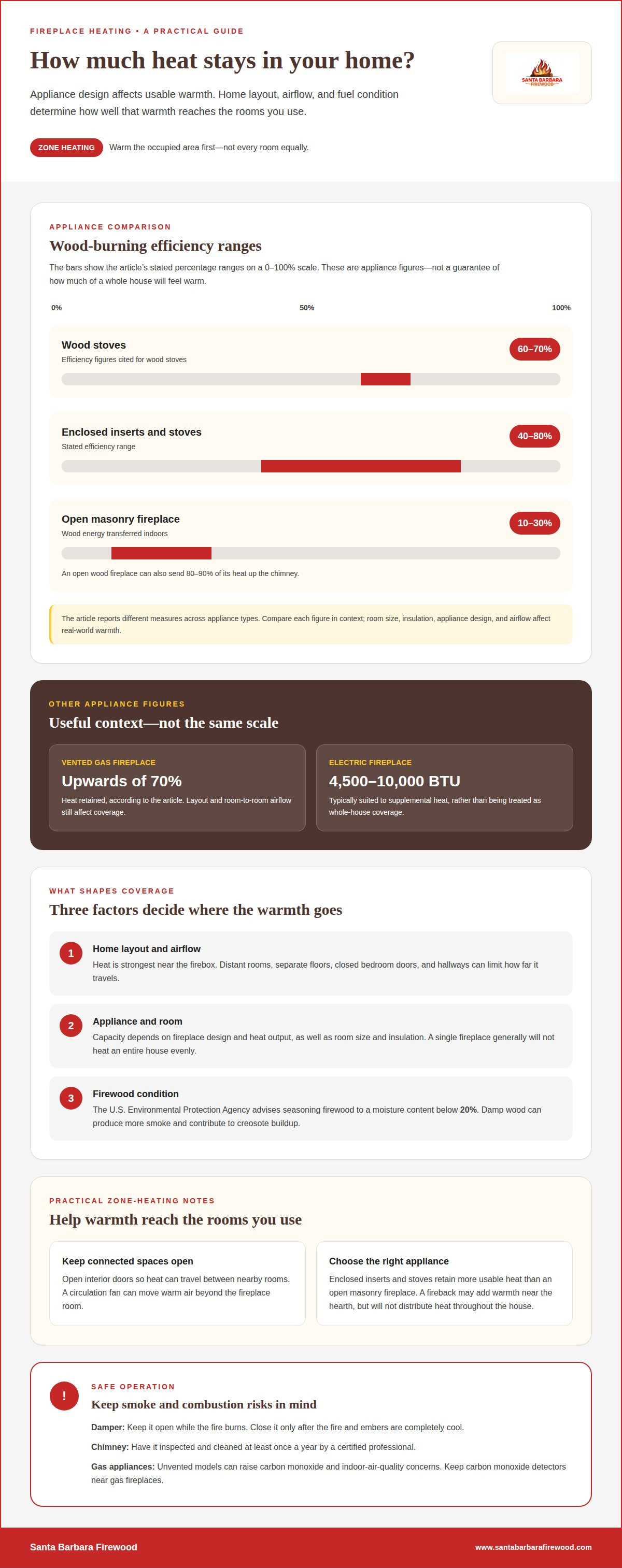
Fireplace capacity depends on its design, heat output, room size, insulation, and air movement. An open wood fireplace can send 80-90% of its heat up the chimney, leaving less warmth in the living area. Wood-burning inserts and stoves retain more usable heat than an open fire. One fireplace generally cannot heat an entire house evenly, especially across several floors or far-separated rooms.
A gas fireplace can provide zone heating, but don’t assume it will heat the whole house. For a CLEARion Elite, compare its stated heating capacity with the room’s size, insulation, and layout. The model name alone doesn’t establish how much warmth it can provide. Base expectations on the appliance’s rated output and the space it serves.
Fireplace and chimney rules or permits depend on local requirements and the work involved. Installation or alterations may be treated differently from using an existing fireplace. Wood and gas fires also carry risks: creosote buildup can increase chimney-fire risk, and unvented gas fireplaces can raise carbon monoxide and indoor air-quality concerns. Use carbon monoxide detectors near gas fireplaces.
Keep the damper open while a fire burns so smoke can escape. Have chimneys inspected and cleaned at least once a year by a certified professional. Regular chimney cleaning helps address creosote buildup and maintain clear airflow.
2. Can a Fireplace Heat a Whole House?
Usually, a single fireplace cannot heat a whole house evenly. Keeping your home warm with a fireplace works best when you account for its strongest heat near the firebox and the lower warmth in distant rooms. A traditional wood-burning fireplace can send 80-90% of its heat up the chimney. A vented gas fireplace retains upwards of 70% of the heat it generates, but layout and room-to-room airflow still affect coverage. Electric fireplaces typically produce 4,500 to 10,000 BTU, making them better suited to supplemental heat.
Fireplaces produce heat through radiation from flames and heated surfaces, as well as warm air moving through the room. At the same time, an open fire can draw indoor air toward the chimney, carrying heat outside. A cast-iron fireback can capture and radiate some heat that would otherwise escape through the fireplace. It may improve warmth near the hearth, but it won’t distribute heat throughout the house.
To warm multiple rooms, leave interior doors open so heat can travel between connected spaces. A circulation fan can also move warm air beyond the fireplace room. Fireplace inserts are another option: their enclosed design retains more usable heat than an open masonry fireplace. For keeping your home warm with a fireplace across connected rooms, how heat moves through the home matters as much as the appliance.
Keep the damper open while a fire burns, allowing smoke to escape. Close it only after the fire and embers are completely cool. Closing it sooner can trap smoke and carbon monoxide indoors. For heat that stays in the living space, focus on the appliance, airflow, and safe fire operation. Explore firewood for fireplace heating as part of planning a wood-burning fire.
3. Wood-burning fireplaces and stoves
Wood-burning appliances differ in how much fuel energy reaches the room. An open masonry fireplace often transfers 10-30% of the wood’s energy indoors, while enclosed inserts and stoves retain more usable heat. Fireplace inserts and wood stoves have a stated efficiency range of 40-80%; figures cited for wood stoves suggest 60-70% efficiency. A practical approach to keeping your home warm with a fireplace is choosing an appliance that suits the space and your heating routine.
Fuel condition matters, too. The U.S. Environmental Protection Agency advises seasoning firewood to a moisture content below 20%. Dry, seasoned wood burns more cleanly than damp wood, which can produce more smoke and contribute to creosote buildup. Burn wood only in a wood-burning fireplace, and keep non-wood products out of the flames.
Gas-burning fireplaces and stoves provide heat without loading wood into the firebox. Gas fireplace inserts often reach over 70% efficiency. Direct-vent gas fireplaces draw combustion air from outside and vent exhaust outdoors. Unvented gas models can raise carbon monoxide and indoor-air-quality concerns, so carbon monoxide detectors belong near gas fireplaces.
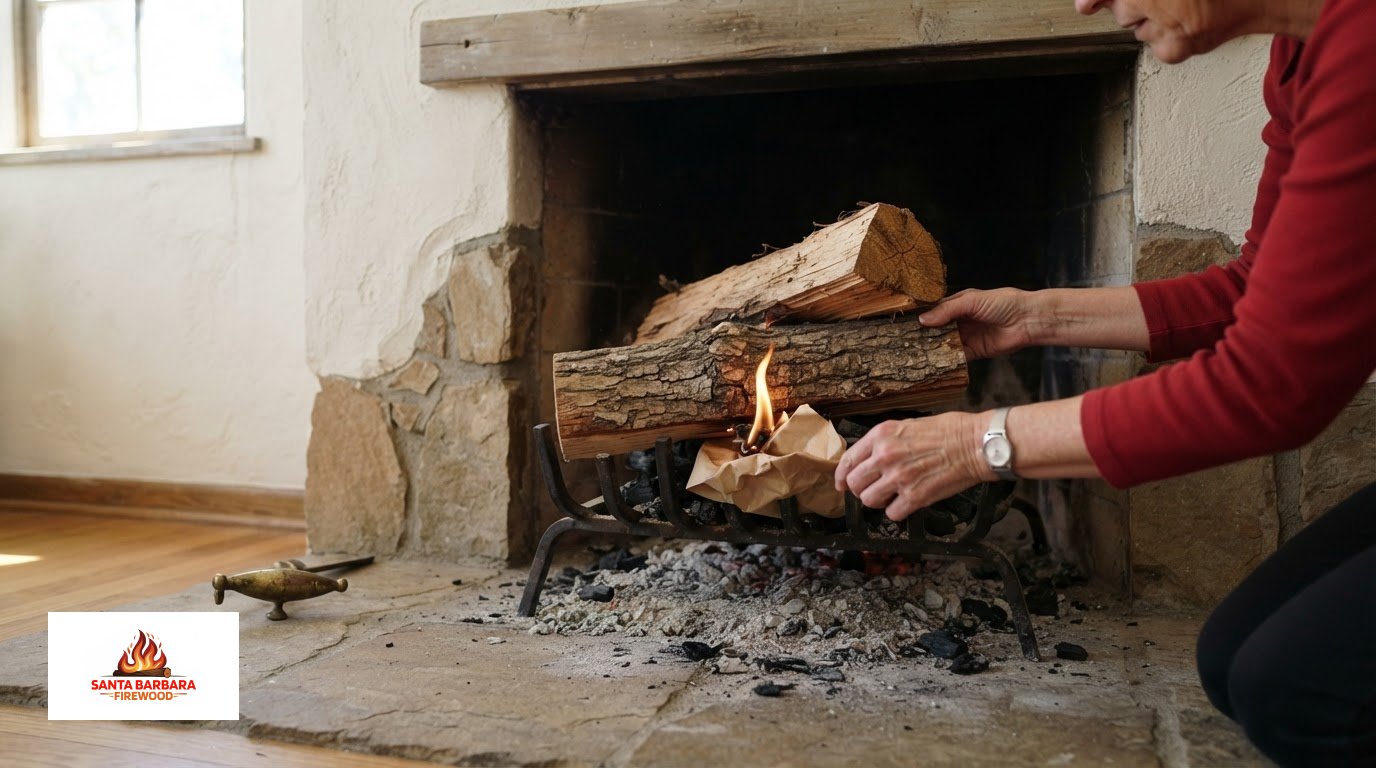
For keeping your home warm with a fireplace, start a wood fire with dry kindling and seasoned firewood. Keep the damper open while it burns, and keep furniture and drapes clear according to the appliance manual. Follow the appliance’s operating instructions for airflow and damper use, and wait until the fire and embers are cool before closing the damper. Order oak firewood for your next fire.
Santa Barbara Firewood
Santa Barbara Firewood helps you prepare for fireplace heating with oak firewood in several cord sizes. Choose from 1/8 cord, 1/4 cord, 1/2 cord, or a full cord, based on your storage space and how often you plan to burn. A smaller quantity can suit occasional fires, while a larger order can help keep fuel on hand through regular use.
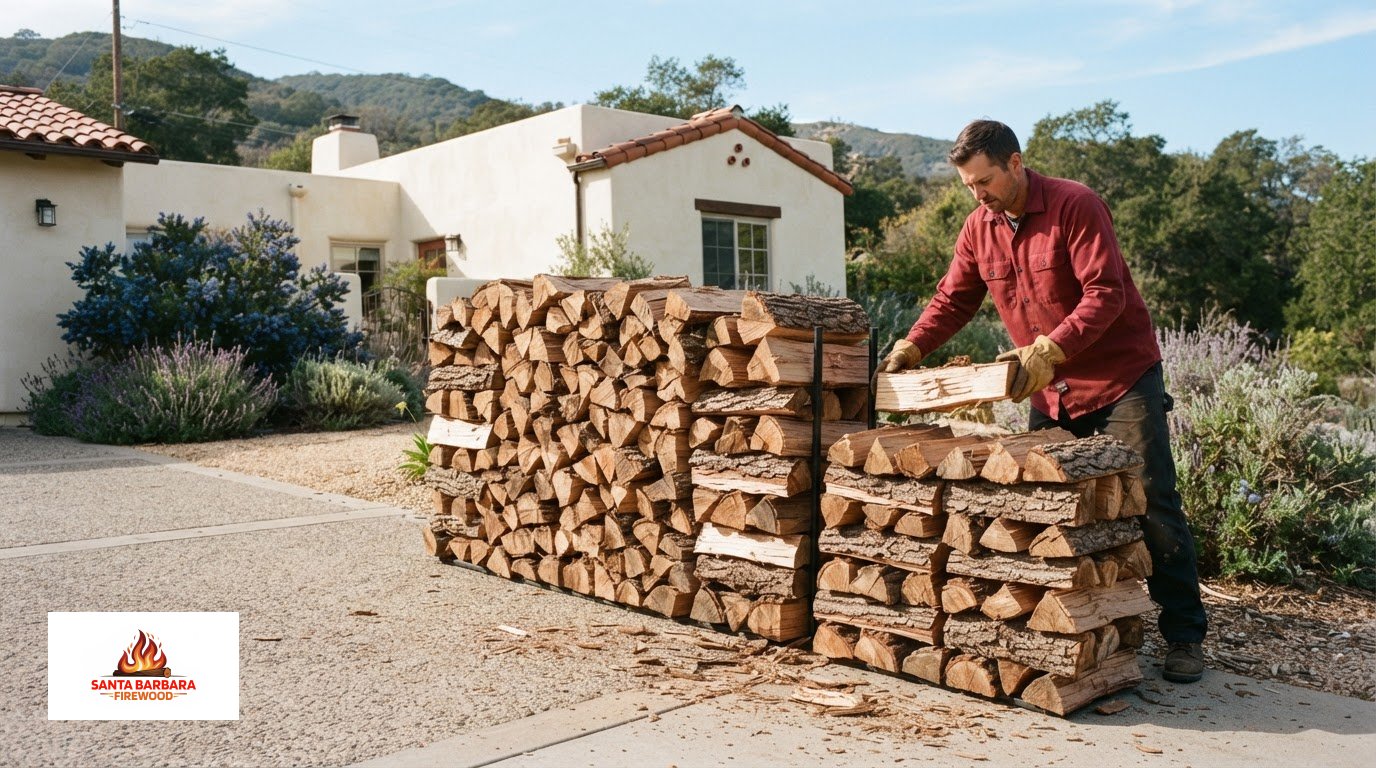
Each option supports practical zone heating: keeping wood ready for the rooms where you use your fireplace or stove. Santa Barbara Firewood delivers oak firewood with free delivery and stacking included. Your firewood will be neatly stacked in the location of your choice. Choose the size that suits your household, and place an order online or via text. Payment can be made online or at delivery.
Make Your Fireplace Routine Work for You
Keeping your home warm with a fireplace starts with a plan that fits how you use each room. Think about where you want a fire, how often you expect to burn, and how much space you have to store wood. This gives you a practical basis for choosing a supply that suits your household, without treating a fireplace as a replacement for whole-home heating.
Santa Barbara Firewood offers oak in 1/8 cord, 1/2 cord, and full cord sizes. Consider which amount best matches your storage and routine, then take the next step at your pace. Contact Santa Barbara Firewood to discuss your firewood needs and plan for comfortable fires ahead.
Frequently Asked Questions
Can a Fireplace Heat a Whole House?
Not reliably, particularly in a large or divided home. A fireplace is best treated as supplemental heat for occupied areas, while central heating serves rooms beyond its reach. An open layout may let warmth travel farther than closed-off rooms or separate floors. The home’s layout affects coverage as much as the appliance itself.
What Type of Fireplace Heats a Home the Best?
For wood heat, an enclosed wood stove or fireplace insert generally transfers more of the fire’s energy into the room than an open masonry fireplace. The right choice depends on where you need warmth and how the home is arranged. Match the appliance’s heating capacity to its room, and plan for other areas to need separate heating.
What is Zone Heating?
Zone heating means directing warmth to the areas you use instead of heating every room equally. For example, you might use a fireplace to warm the living room in the evening while relying on another heat source elsewhere. Consider your household’s routine and the rooms people occupy most when deciding which space to heat.
How Much Heat Can a Fireplace Produce, and How Much of It Warms the Room?
Heat output varies by appliance and fuel. Popular gas stove and fireplace models fall in the 20,000 to 60,000 BTU range. That figure describes heat output, not necessarily the warmth delivered to the room. Venting, appliance design, and heat escaping through the chimney all affect how much usable heat stays indoors.
What Types of Fireplaces Are Most Efficient for Heating a Home?
Enclosed appliances tend to retain more usable heat than open masonry fireplaces. Wood-burning fireplace inserts can achieve up to 75-80% efficiency, while gas fireplace inserts often reach over 70%. Consider fuel preference, the room being heated, and the appliance’s venting design. These factors help identify a suitable option for supplemental home heating.
Comments